
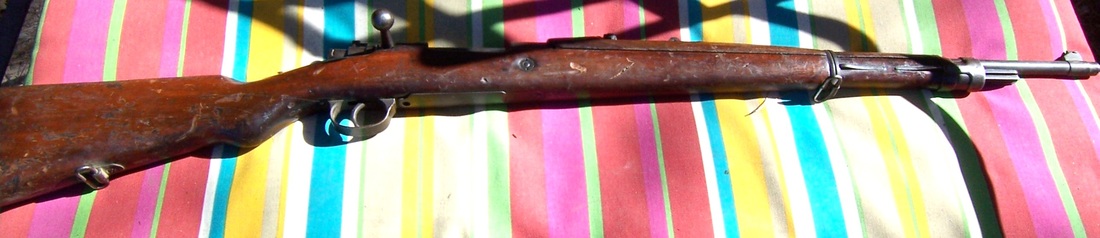



This is a Greek M1930 rifle likely used by the Greeks in Albania, against the Italian invasion of Greece in WWII. This rifle is CAI import marked, and for a number of other reasons, I believe remained in Albania during and after the war.
In WWII the communist Albanian Partisans fought against the German and Italian Fascist occupiers, and the nationalist Balli Kombëtar who allied with them; another group, the royalist Legaliteti, did not fight anyone. The Partisans were poorly trained fighters, yet extremely tough under adversity, and with high morale. Some supplies were received from the Allies, but overall the Partisans were poorly equipped. An OSS report stated:
"All arms possessed by the Partisans are small arms. There is a mixture of guns: Greek and Italian rifles, a few American guns, German and Italian mortars (of which the German mortars are superior). Arms are what they can get, most of them captured from the enemy, the rest furnished by the Allies. . . . All 40,000 front-line troops have weapons of one sort or another, in the same manner as their clothing goes. If one man has a tommy-gun, another has a pistol, and so on."*
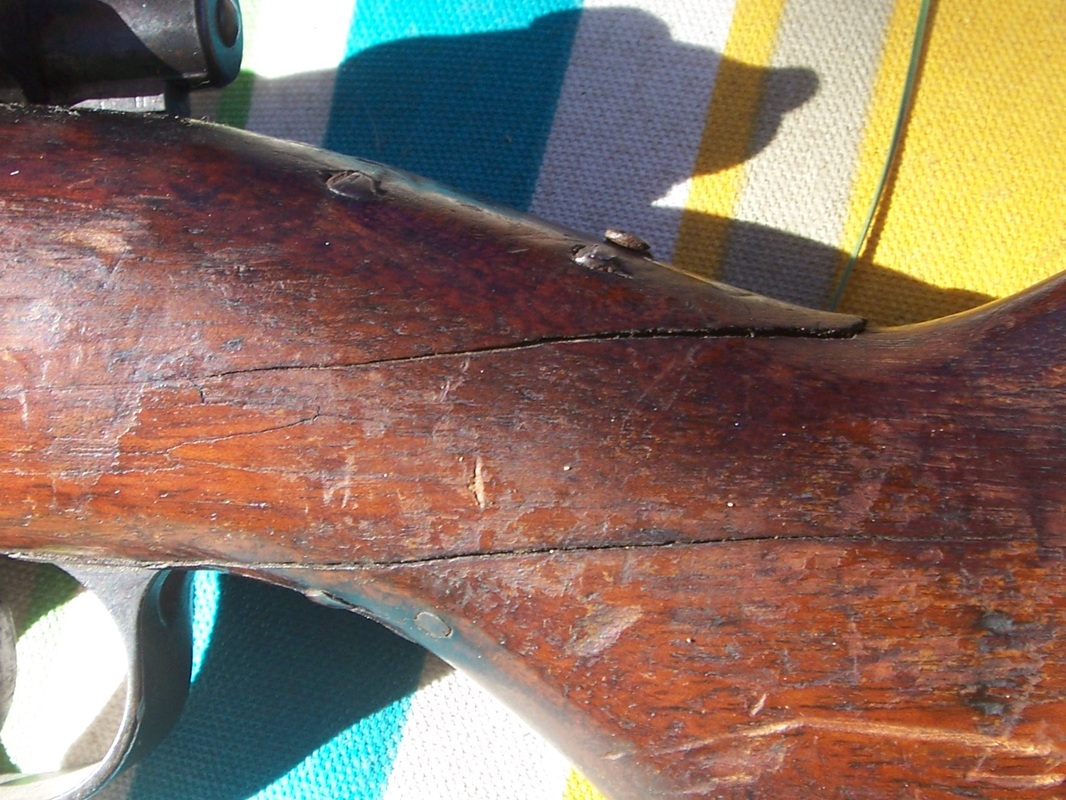
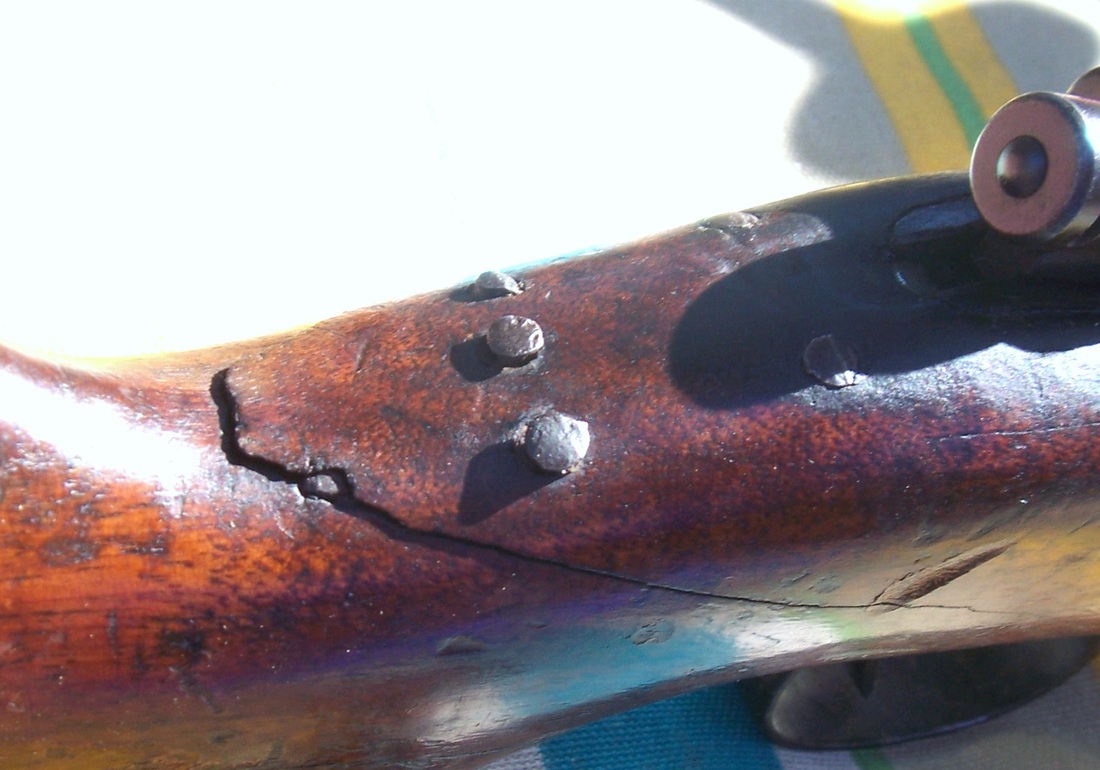
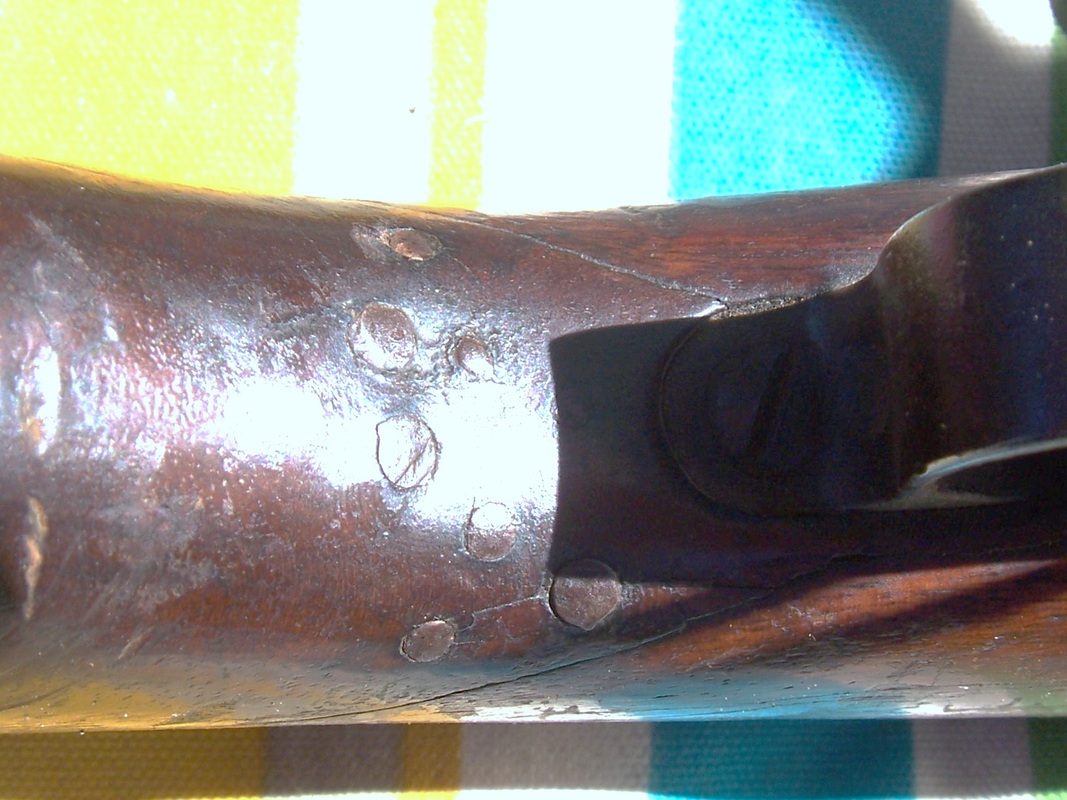
During its use it received many deep stock gouges and a wrist crack, which was fixed by nails, possibly in a field repair. This damage would be consistent with the amount of hand to hand combat in places like Mount Pindus, where my grandfather served. The interior of the stock is insanely dirty, the bolt is gunky, and the rifling is shot out, but it will still fire.
At some point after WWII the stock had shellac applied to it, which is not the original finish. I surmise this is an Albanian finish, as they coated their later SKS's in shellac, and would tolerate a rifle in such poor condition. Also the front barrel band is from a Yugoslavian M1924 Mauser, and Albania would have had a number of M1924's leftover from WWII. Finally I have seen a number of Albanian SKS's with stock cracks fixed by nails; perhaps the rifle was fixed in post-WWII Albania rather than by WWII Greeks.
*. I quote The OSS in World War II Albania: Covert Operations and Collaboration with Communist Partisans by Peter Lucas, McFarland & Co. Inc., 2007.
In WWII the communist Albanian Partisans fought against the German and Italian Fascist occupiers, and the nationalist Balli Kombëtar who allied with them; another group, the royalist Legaliteti, did not fight anyone. The Partisans were poorly trained fighters, yet extremely tough under adversity, and with high morale. Some supplies were received from the Allies, but overall the Partisans were poorly equipped. An OSS report stated:
"All arms possessed by the Partisans are small arms. There is a mixture of guns: Greek and Italian rifles, a few American guns, German and Italian mortars (of which the German mortars are superior). Arms are what they can get, most of them captured from the enemy, the rest furnished by the Allies. . . . All 40,000 front-line troops have weapons of one sort or another, in the same manner as their clothing goes. If one man has a tommy-gun, another has a pistol, and so on."*
During its use it received many deep stock gouges and a wrist crack, which was fixed by nails, possibly in a field repair. This damage would be consistent with the amount of hand to hand combat in places like Mount Pindus, where my grandfather served. The interior of the stock is insanely dirty, the bolt is gunky, and the rifling is shot out, but it will still fire.
At some point after WWII the stock had shellac applied to it, which is not the original finish. I surmise this is an Albanian finish, as they coated their later SKS's in shellac, and would tolerate a rifle in such poor condition. Also the front barrel band is from a Yugoslavian M1924 Mauser, and Albania would have had a number of M1924's leftover from WWII. Finally I have seen a number of Albanian SKS's with stock cracks fixed by nails; perhaps the rifle was fixed in post-WWII Albania rather than by WWII Greeks.
*. I quote The OSS in World War II Albania: Covert Operations and Collaboration with Communist Partisans by Peter Lucas, McFarland & Co. Inc., 2007.
 RSS Feed
