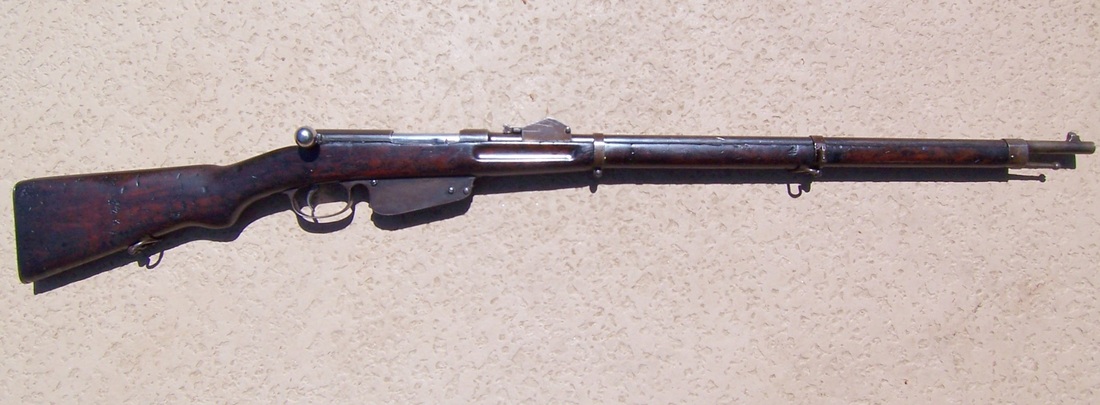
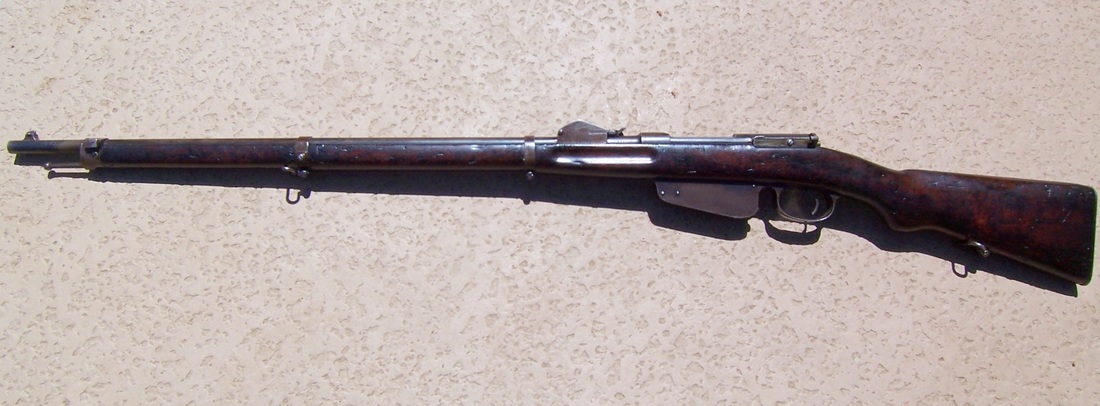
This is a Steyr M88/90 used by Bulgaria, and later Yugoslavia. It could have been captured in the Second Balkan War or World War One, or been a war reparation after WWI ended.
Bulgaria was initially allied with Serbia, Greece, and Montenegro in their assault on the Ottoman Empire to gain the rest of the Empire's European holdings, in the 1912-13 First Balkan War. Much of this land was initially ceded under the Treaty of San Stefano, which ended the Russo-Turkish War of 1877-78. However, soon after the first treaty, the Treaty of Berlin was formulated to appease all the Great Powers of Europe. The largest point was that Bulgaria was feared to be too large, which would have given Russia excessive influence in the Balkans. Much of the European territory was thus returned to the Ottoman Empire.
After the First Balkan War, Bulgaria was not satisfied with its share - most of Macedonia (ethnically closer to Bulgarians) was occupied by Serbia, and Greece took the port of Salonika (coveted by all nearly everyone, even the distant Austria-Hungary). Bulgaria suffered most of the fighting and was still locked in positions against the Ottomans, but was not given its promised share in secret prewar treaties with Serbia and Greece.
The unrelenting nature of Serbia and Greece were exacerbated by the independence of Albania in 1913. Independence was assured by Austria-Hungary, who threatened (and perhaps even paid off) King Nikola of Montenegro to abandon the siege of Scutari (now Shkodër.) Since Serbia could not take Albanian lands, it wanted Macedonian ones. Greece was similarly unrelenting in keeping Salonika, which it beat Bulgarian forces to by a matter of days.
Bulgaria got the short end of the deal, and tried to strike back in the Second Balkan War of 1913. However, Bulgaria was soon defeated when Serbian, Greek, Ottoman, and Romanian forces turned on the disheartened Bulgarians. This loss caused Bulgaria to join the Central Powers in WWI, and after another failure, the Axis in WWII.
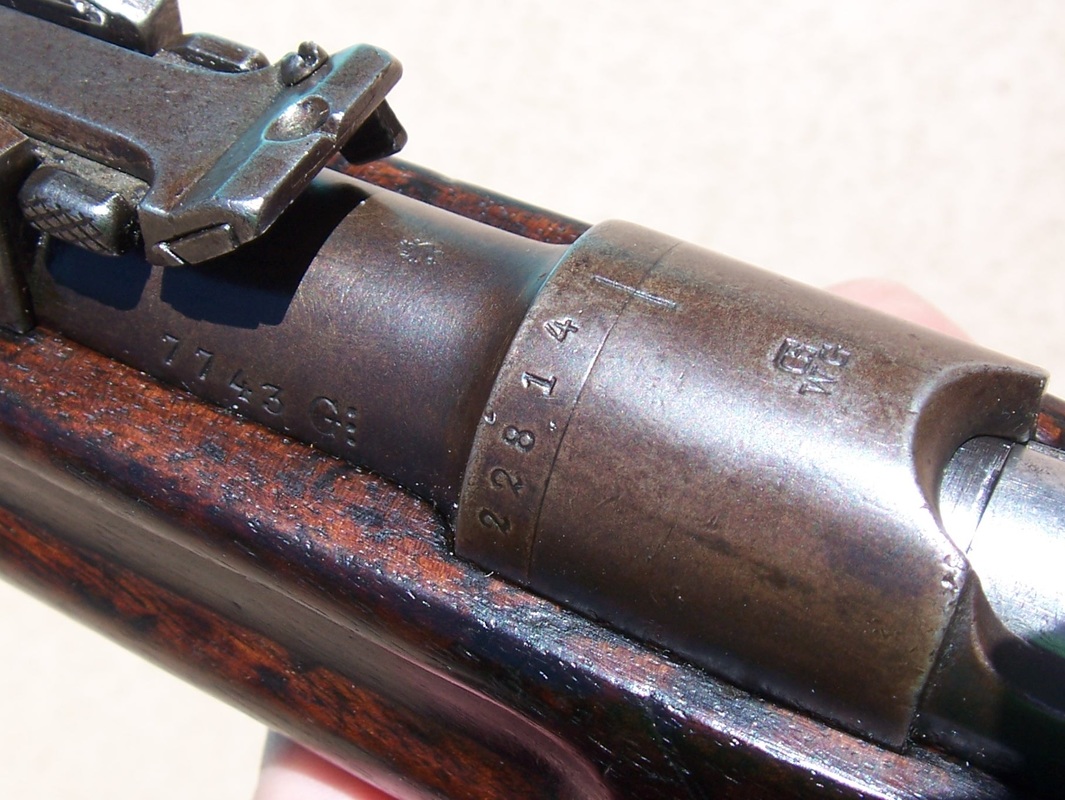
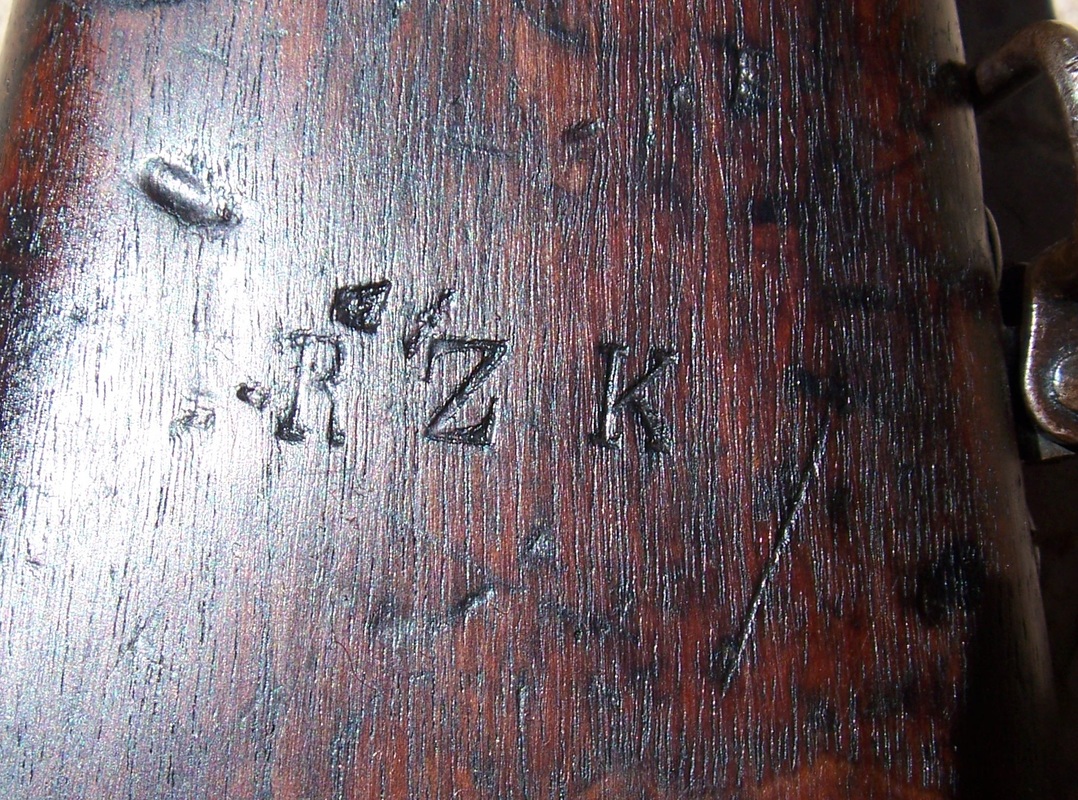
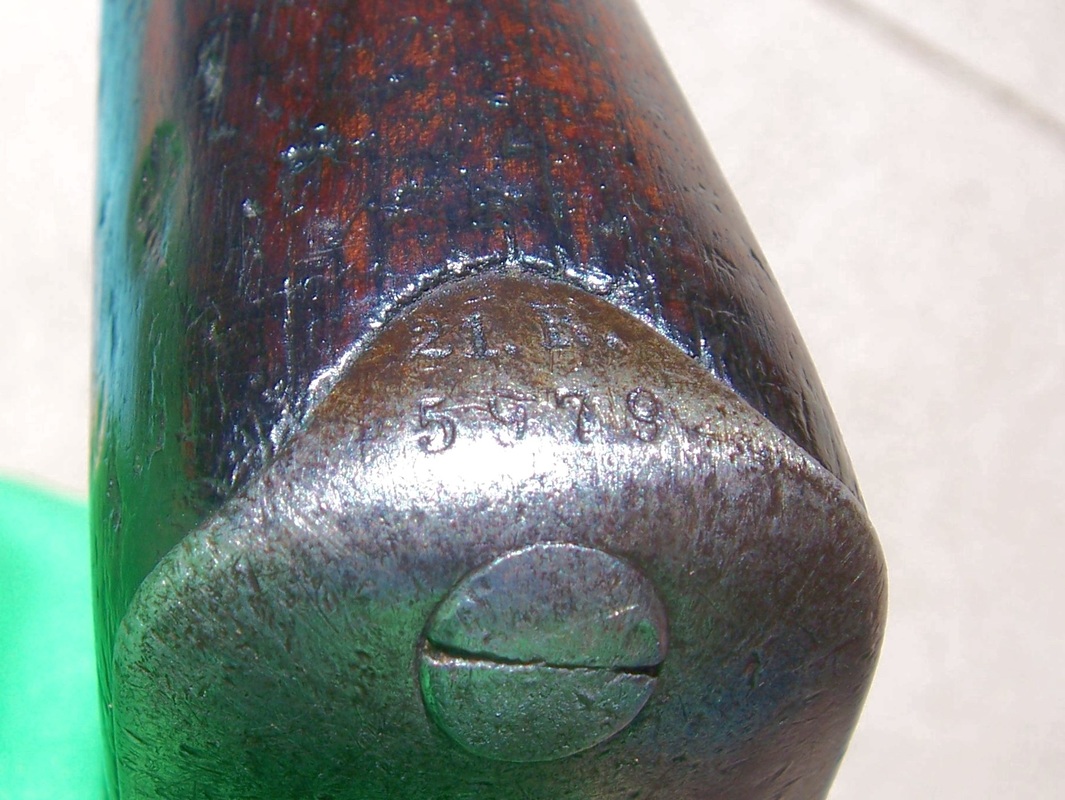
This rifle has the Bulgarian lion on the barrel, and extra serial number shows it is a Bulgarian contract; however there is an Austrian or Hungarian unit mark on the buttplate of the mismatched stock. When this rifle got the Yugoslav RZK ("Remontni Zavod Kragujevac") stock marking, the rifle was probably refurbished and a different stock put on.
This rifle has a decent bore and has no import marks. The bolt handle is unusually bright and shiny, and the wood feels smooth like it was sanded a long time ago. The rear sight graduations are marked FGGY of Budapest.
Bulgaria was initially allied with Serbia, Greece, and Montenegro in their assault on the Ottoman Empire to gain the rest of the Empire's European holdings, in the 1912-13 First Balkan War. Much of this land was initially ceded under the Treaty of San Stefano, which ended the Russo-Turkish War of 1877-78. However, soon after the first treaty, the Treaty of Berlin was formulated to appease all the Great Powers of Europe. The largest point was that Bulgaria was feared to be too large, which would have given Russia excessive influence in the Balkans. Much of the European territory was thus returned to the Ottoman Empire.
After the First Balkan War, Bulgaria was not satisfied with its share - most of Macedonia (ethnically closer to Bulgarians) was occupied by Serbia, and Greece took the port of Salonika (coveted by all nearly everyone, even the distant Austria-Hungary). Bulgaria suffered most of the fighting and was still locked in positions against the Ottomans, but was not given its promised share in secret prewar treaties with Serbia and Greece.
The unrelenting nature of Serbia and Greece were exacerbated by the independence of Albania in 1913. Independence was assured by Austria-Hungary, who threatened (and perhaps even paid off) King Nikola of Montenegro to abandon the siege of Scutari (now Shkodër.) Since Serbia could not take Albanian lands, it wanted Macedonian ones. Greece was similarly unrelenting in keeping Salonika, which it beat Bulgarian forces to by a matter of days.
Bulgaria got the short end of the deal, and tried to strike back in the Second Balkan War of 1913. However, Bulgaria was soon defeated when Serbian, Greek, Ottoman, and Romanian forces turned on the disheartened Bulgarians. This loss caused Bulgaria to join the Central Powers in WWI, and after another failure, the Axis in WWII.
This rifle has the Bulgarian lion on the barrel, and extra serial number shows it is a Bulgarian contract; however there is an Austrian or Hungarian unit mark on the buttplate of the mismatched stock. When this rifle got the Yugoslav RZK ("Remontni Zavod Kragujevac") stock marking, the rifle was probably refurbished and a different stock put on.
This rifle has a decent bore and has no import marks. The bolt handle is unusually bright and shiny, and the wood feels smooth like it was sanded a long time ago. The rear sight graduations are marked FGGY of Budapest.
 RSS Feed
